The Federal Government
June 26, 2026
Starting at the Top: The Federal Government and Education
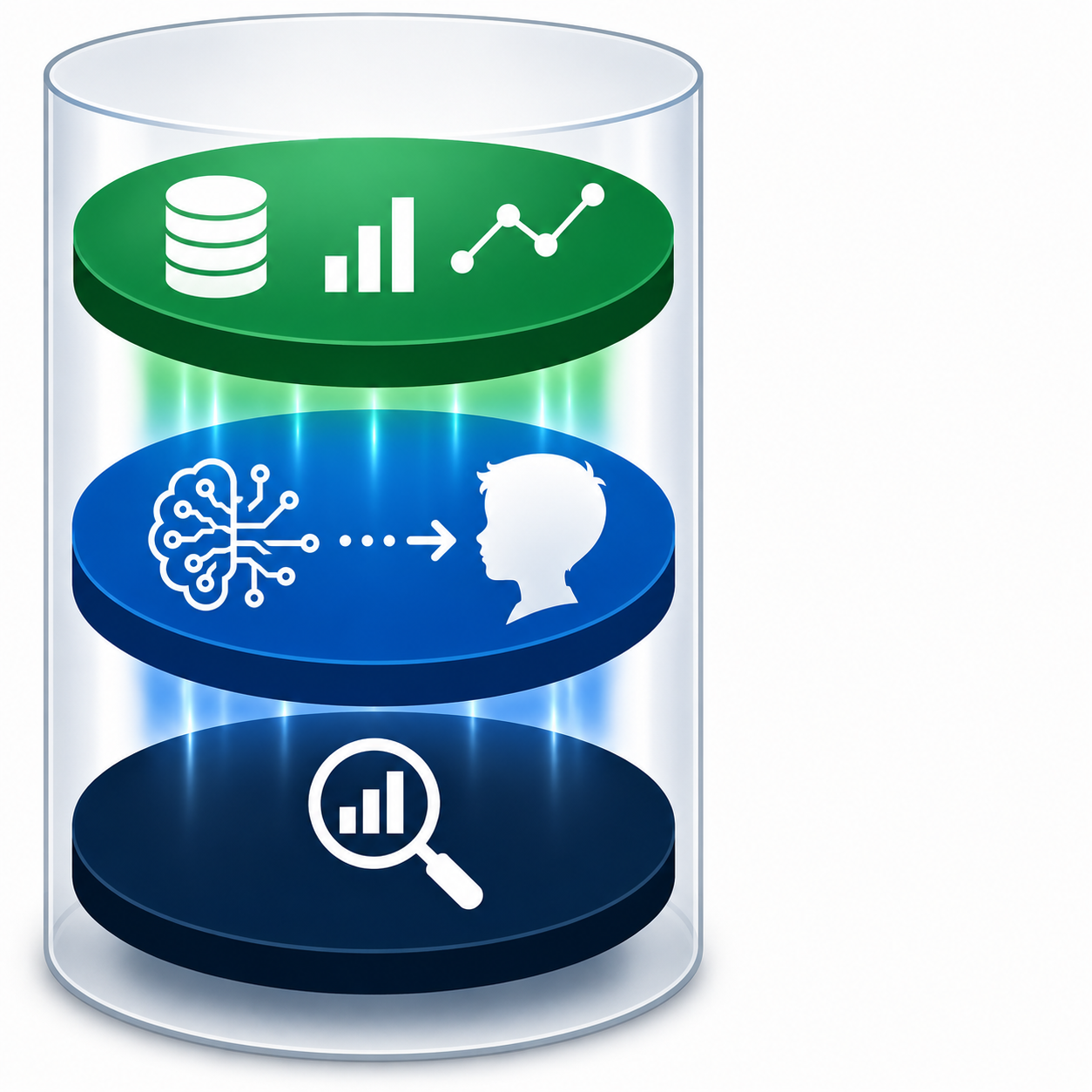
That's the right place to start, because the federal layer is the one that reframes everything beneath it. Here's the top of the pyramid as the search establishes it, and why it sets the terms for every level below.
The defining federal fact right now is retreat and devolution. The federal government is not expanding its role in education — it is deliberately contracting it and pushing authority down to the states. Trump's May 2025 executive order directs the closure of the Department of Education and the return of education authority to the states; Secretary McMahon has described the department's "final mission" as shuttering itself, and in November 2025 she began outsourcing its functions to other agencies. That is the posture: Washington stepping back, on purpose.
The research and data spine of federal education has been hollowed out. This is the part that matters most for your work. IES lost roughly 90% of its staff (from ~191 down toward 30, and per the June 24 Inspector General report, to about 16% of pre-administration levels); somewhere between $881 million and $1.1 billion in research grants and contracts were canceled; and NCES — the statistical agency that has run federal education data for 150 years — was reduced to about three people. The Supreme Court let those layoffs stand in July 2025. New IES funding is frozen, and the longitudinal studies are under review for cuts. The one survivor is NAEP, the Nation's Report Card — the only collection named in statute — which is being kept on track by loaned staff, and whose 2024 results (grade 4 and 8 reading down about five points since 2019) are the very numbers driving the state literacy wave.
On AI, the federal move is deregulatory — but with a carve-out that protects your market. Executive Order 14365 (December 11, 2025) tries to preempt and discourage state AI laws indirectly, through a DOJ task force, FTC and FCC action, and conditioned funding. It is not self-executing, so state AI laws remain enforceable in the near term — and, critically, it expressly preserves state authority over child safety, data-center infrastructure, and state government procurement and use of AI. School AI-policy and procurement — COMPLY's exact target — sits inside that protected zone.
Now the "so what," which is the whole reason to start here. The federal top is characterized by withdrawal, and withdrawal at the top forces everything downward. Three cascades follow directly:
The data vacuum elevates state-level and public-data measurement. As the federal statistical apparatus degrades, reliable national data thins out — which raises the value of tools that run on state and public data with no federal dependency. VERA is built exactly that way: it operates on public CDE/state data and needs nothing from NCES.
The research-funding source shifts. IES was the historic funder of the Greenberg/ALRC/GPAER line and the federal SLDS grant program. With it frozen, the research-institution model cannot lean on federal money — it has to run on state, university, and philanthropic funding. That's not a setback so much as a clarifier: it tells you the research lane's money must come from Stanford/SCALE-type partnerships, philanthropy, and state contracts like AB 2225, not Washington.
The center of gravity moves to the states. Authority, accountability, and — by attrition — data and research capacity are all migrating from Washington to state capitals. That is the single largest structural tailwind for your entire model, because your channels are state-level: CSBA, GOEWS, state legislatures, state universities. The federal retreat is the reason the state layer matters more, not less.
That's the top. Working down, the next level is the states stepping into that vacuum — the four currents (AI policy, science-of-reading literacy, longitudinal data systems, achievement-gap accountability) that are the national pattern of states building what the federal government is abandoning. Below that sits your two focus states and their specific mechanisms, then the institutional channels, then the products and the named plays.
Appendix — Acronyms and Full Translations